Car Maintenance Schedule for Beginners: What to Do and When
A beginner-friendly car maintenance schedule by interval—oil, tires, brakes, fluids, filters, battery and more—plus how to read your owner's manual.

Here is the short version: change your oil and rotate your tires on schedule, check your tires and fluids monthly, replace wiper blades and the engine air filter about once a year, and handle big-ticket items like brake fluid, coolant, spark plugs and the timing belt at the mileage your manufacturer specifies. The schedule below shows exactly what to do and when.
One rule matters more than any table on the internet: your owner’s manual and your car’s maintenance minder are the final word. A generic schedule is a solid starting point, but intervals vary by make, model, engine and oil type. Use this guide to understand the rhythm of car care, then confirm the specifics for your exact vehicle.
The quick-reference maintenance schedule
| Interval | What to do |
|---|---|
| Every fill-up | Glance at dashboard lights; check for new leaks under the car; listen for new noises |
| Monthly | Check tire pressure and tread; test all lights; check oil level; top up washer fluid; scan fluid levels |
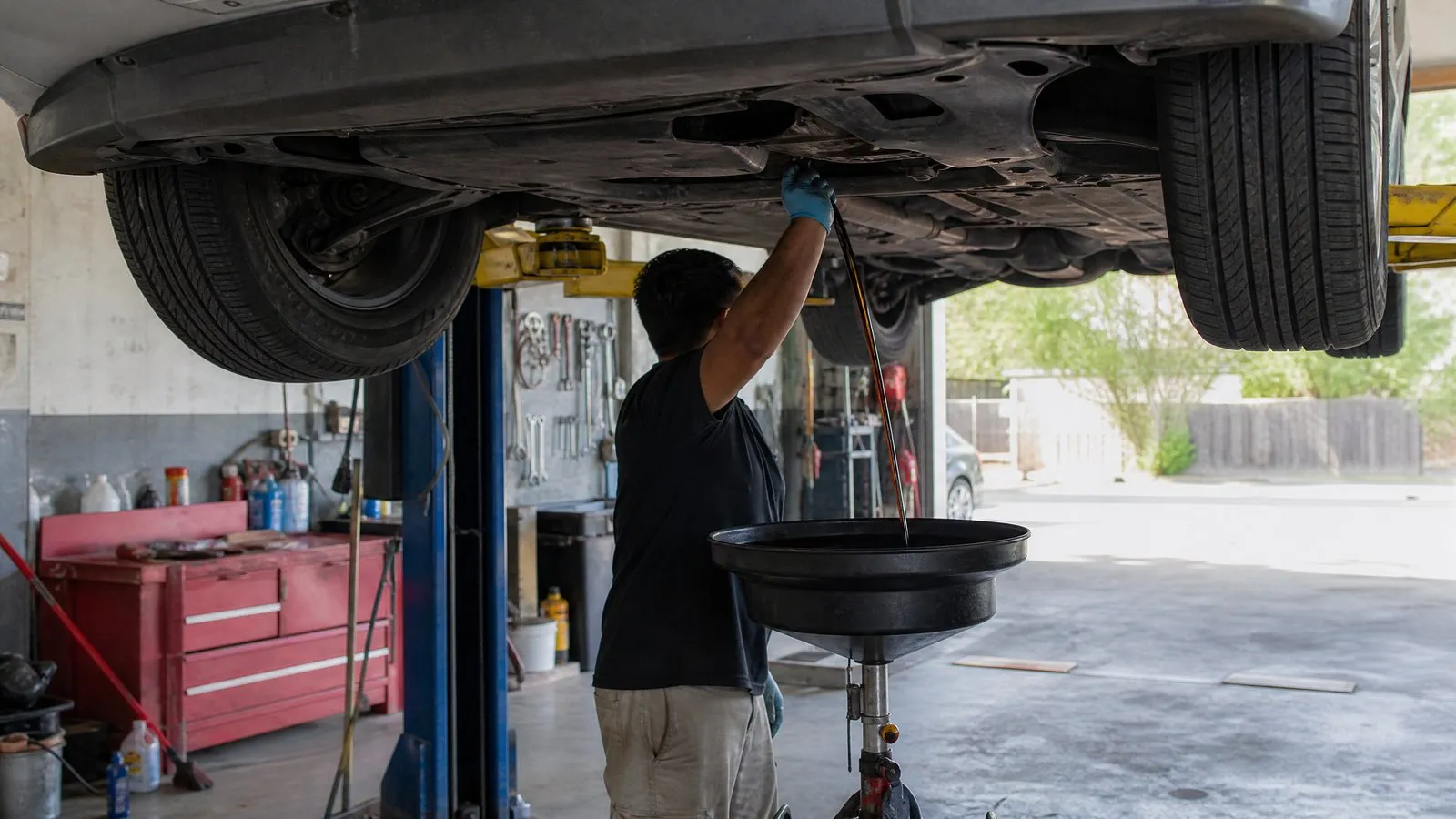
| Every 3–6 months or 5,000–7,500 miles | Change oil and filter (per your manual); rotate tires; inspect brakes, belts and hoses |
| Yearly | Replace wiper blades; replace engine air filter and cabin air filter (or as needed); test battery; check coolant strength |
| Every ~30,000 miles | Replace engine air and cabin filters; inspect brake pads and fluid; inspect suspension and transmission fluid |
| Every ~60,000 miles | Replace brake fluid; often replace spark plugs; service transmission fluid; inspect/replace coolant |
| Every ~90,000–100,000 miles | Replace timing belt (if equipped); replace spark plugs (long-life type); flush coolant; major inspection |
Think of these as buckets, not deadlines carved in stone. The sections below explain what goes in each one and why.
Every fill-up: 30 seconds of awareness
You are already standing at the car, so make it count.
- Watch your dashboard. When you start up, a few lights flash and go out. One that stays on—especially oil pressure, battery, or the check engine light—deserves attention. If the oil pressure light comes on while driving, stop safely and shut off the engine; running without oil pressure can destroy an engine in minutes.
- Look under the car as you walk up. Fresh puddles of black, brown, green, pink or clear fluid are worth investigating.
- Note new noises or smells. A squeal when braking, a new rattle, or a sweet smell from the vents are all early warnings.
If a warning light has you stumped, our Dashboard Warning Lights Explained guide and the interactive Warning Light Guide tell you what each one means and how urgent it is.
Monthly: the 10-minute check that prevents breakdowns
Most roadside breakdowns come from tires, the battery, or running something low. A short monthly routine catches nearly all of them. We lay out the whole thing in The 10-Minute Monthly Car Checklist, but here are the essentials.
Tires
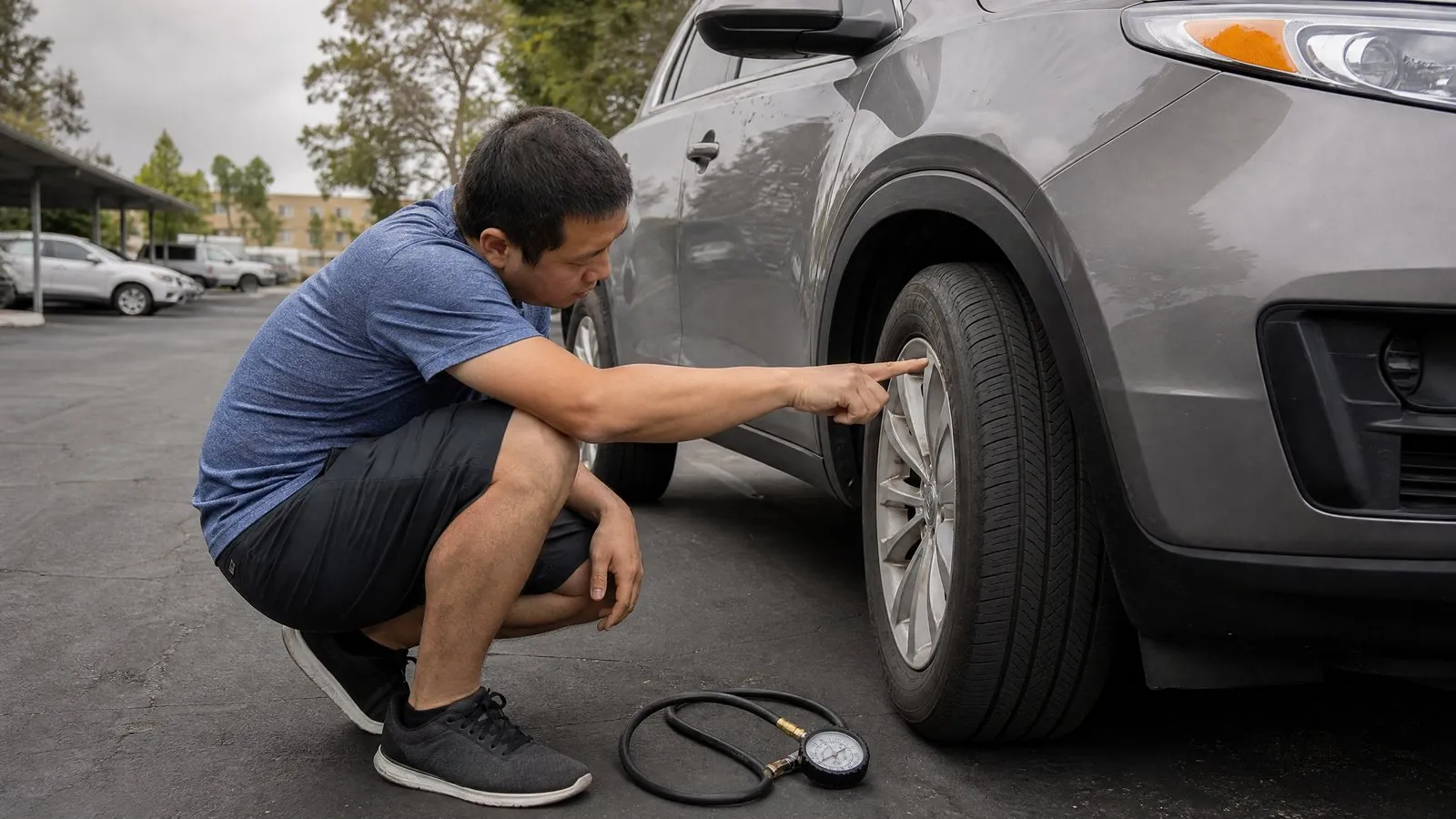
Set your tires to the pressure on the sticker in the driver’s door jamb—not the number on the tire sidewall, which is a maximum. Check them cold, before driving. Most passenger cars call for somewhere around 30–35 psi.
While you are down there, check tread depth. The classic test: insert a penny into a tread groove with Lincoln’s head pointing down. If you can see the top of his head, you’re at or below 2/32” and it’s time for new tires. Our guides on checking tire pressure and tire tread depth walk through both.
Fluids and lights
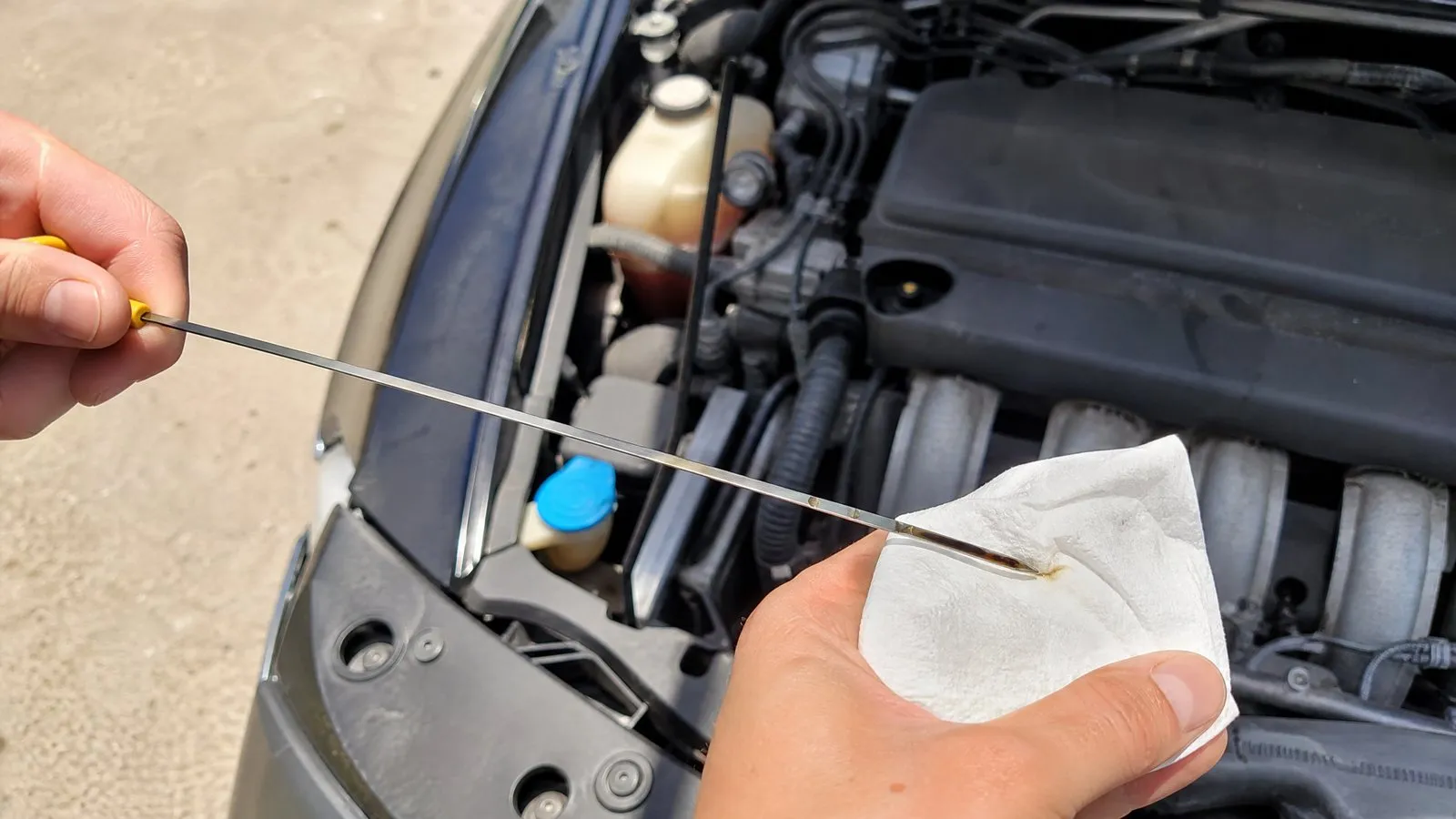
- Engine oil: Pull the dipstick, wipe, reinsert, and read the level. The color and texture tell a story too—amber is fresh, dark brown to black is normal with miles, milky or gritty is a red flag.
- Washer fluid: Top it up; it’s cheap and you’ll want it.
- Lights: Walk around with the headlights, brake lights and turn signals on, or have someone help.
A quick scan of your other reservoirs rounds it out. The six car fluids to know explains what each one does and where to find it.
Every 3–6 months or 5,000–7,500 miles: oil and tire rotation
This is the core of routine maintenance, and the two jobs usually pair up nicely.
Oil change
Modern engines using full synthetic oil often go 7,500 to 10,000 miles between changes, while older cars or those on conventional oil may want 3,000 to 5,000. The right number is in your manual, and many cars calculate it for you with an oil-life monitor. Don’t guess—how often you should really change your oil breaks down the variables, and our Oil Change Calculator gives you a personalized interval in under a minute.
A quick note on time: even if you drive very little, most manufacturers want the oil changed at least once or twice a year because it degrades with age, not just mileage.
Tire rotation
Rotating your tires every 5,000–7,500 miles evens out wear and can add thousands of miles to their life. Many shops do it free or cheap with an oil change. See how often to rotate tires and why it saves money for the patterns and timing.
A quick inspection
Whoever does your oil change should also eyeball the belts, hoses, and brake pads. This is a good moment to ask how much pad is left (measured in millimeters) so you’re never surprised.
Yearly: filters, wipers, battery and coolant
Some jobs track the calendar more than the odometer.
Wiper blades
Rubber hardens and tears over 6–12 months. If your wipers streak, chatter or skip, replace them—it’s a five-minute job you can do yourself for roughly $15–$40 a pair.
Engine and cabin air filters
A clogged engine air filter hurts performance and economy; a dirty cabin air filter makes your heater and AC weak and your car smell musty. Both are inexpensive and often tool-free. Our guide on checking and replacing the engine air filter shows how. Replace them yearly or every 15,000–30,000 miles, sooner if you drive on dusty roads.
Battery
Most car batteries last 3 to 5 years. Once yours passes the three-year mark, have it load-tested annually—many auto parts stores do it free. Slow cranking, dim lights, or needing a jump are signs it’s fading. Read more on how long a car battery lasts, and keep jump-start steps handy just in case. If your battery warning light comes on while driving, that points to the charging system, not just the battery.
Coolant check
Make sure coolant is topped up and, if your car is a few years old, that its freeze protection is still good before winter. Always check coolant on a cold engine—never open the cap while hot. Here’s how to check and top up coolant safely. Fall is also the time to run through the rest of our winter prep checklist.
Every 30k / 60k / 100k miles: the bigger services
These “milestone” services cover parts that last a long time but are expensive—or dangerous—to ignore.
Around 30,000 miles
- Replace engine and cabin air filters if not already done.
- Inspect brake pads, rotors and brake fluid.
- Inspect suspension, steering components and drive belts.
- Check transmission fluid condition.
Around 60,000 miles
- Brake fluid replacement. Brake fluid absorbs moisture over time, which lowers its boiling point and can affect braking in hard stops. Most manufacturers call for fresh fluid every 2–3 years or 30,000–45,000 miles—check your manual. See brake fluid: when to check and replace it.
- Spark plugs. Standard plugs are often due around here; long-life iridium plugs may last to 100,000 miles.
- Transmission fluid service. Some automatics need fresh fluid around 60,000 miles; others use “lifetime” fluid that still benefits from service. Transmission fluid basics explains how to tell which you have—getting this wrong is expensive.
- Coolant. Many long-life coolants are due for replacement between 60,000 and 100,000 miles.
Around 90,000–100,000 miles
- Timing belt (if your engine has one). This is the big one. If your engine uses a rubber timing belt, it typically must be replaced around 60,000–100,000 miles. On many engines, a snapped belt causes major internal damage costing thousands. Many modern engines instead use a timing chain that is designed to last the life of the car—your manual will tell you which you have. Do not skip this if a belt is specified.
- Spark plugs (long-life type), coolant flush, and a thorough inspection of hoses, mounts and suspension.
For real dollar figures on all of these, our guide to average car repair and maintenance costs itemizes what to expect.
“Normal” vs “severe” service: which schedule is yours?
Here’s something most owners miss. Manufacturers publish two maintenance schedules, and many drivers actually fall under the tougher one.
The severe service schedule (sometimes called “special operating conditions”) shortens intervals—for example, oil changes and filter swaps come sooner. You likely qualify for severe service if you regularly:
- Make lots of short trips under 5–10 miles, especially in cold weather
- Drive in stop-and-go traffic or extreme heat
- Tow a trailer or carry heavy loads
- Drive on dusty, gravel or salted roads
- Idle for long periods
Short-trip, stop-and-go driving is more common than most people think, so don’t assume you’re a “normal” driver by default. If several of those apply to you, follow the shorter severe-service intervals in your manual. The Car Care Council and AAA both emphasize matching your schedule to how you actually drive, not how you wish you drove.
Saving money without cutting corners
Routine maintenance is far cheaper than the repairs it prevents, but you still shouldn’t overpay.
- Do the easy stuff yourself. Air filters, wiper blades, washer fluid and monthly checks need no special skills.
- Know what’s actually due. Shops sometimes recommend services before they’re needed. Our guide on avoiding unnecessary repair upsells helps you push back politely and keep what matters.
- Find a shop you trust. A good independent mechanic who knows your car is worth more than any coupon. Here’s how to find a good mechanic.
- Keep records. A simple notebook or phone note of dates and mileage prevents double-paying and helps at resale.
A word on warranties: skipping scheduled maintenance can, in some cases, affect a claim, so keep your receipts. What’s covered varies—factory vs extended warranty explains the difference.
When to stop and call a professional
Handle the basics yourself, but don’t push through warning signs. Get professional help promptly if you notice:
- A brake pedal that feels soft, sinks, or pulses, or any grinding when braking—see signs your brakes need attention
- Steam, a sweet smell, or a rising temperature gauge, which can mean overheating—pull over safely
- The oil pressure or brake warning lights staying on
- Any loss of steering or braking control
When in doubt, it’s always cheaper to ask than to assume.
FAQ
How do I find my car’s exact maintenance schedule?
Check the maintenance section of your owner’s manual, usually near the back. If you don’t have the paper copy, the manufacturer’s website or app often has a digital version by VIN. Your car’s maintenance minder or oil-life display also tracks service based on your real driving.
Is the mileage or the time interval the one that counts?
Whichever comes first. If your oil is due at 7,500 miles or 12 months and you only drive 4,000 miles a year, change it at 12 months. Oil and fluids degrade with age as well as use, so the calendar matters for low-mileage drivers.
Do I really need dealer service to keep my warranty valid?
No. In the US, you can use an independent shop or do the work yourself and keep your factory warranty intact, as long as you perform the required maintenance and keep records and receipts. You’re not required to pay dealer prices.
How do I know if my car has a timing belt or a timing chain?
Your owner’s manual lists it, or a mechanic can tell you in seconds. It matters because a belt is a scheduled replacement item (often 60,000–100,000 miles) while most chains are designed to last the engine’s life. Confirm before assuming you can skip it.
What’s the single most important thing a beginner should do?
Check your tire pressure and engine oil monthly, and never ignore a warning light. Those habits catch the majority of problems that leave people stranded or lead to costly engine and tire damage.