How to Check Your Engine Oil (and What the Color Tells You)
Learn how to check your engine oil the right way, read the dipstick, top up safely, and know what oil color and texture can (and can't) tell you.
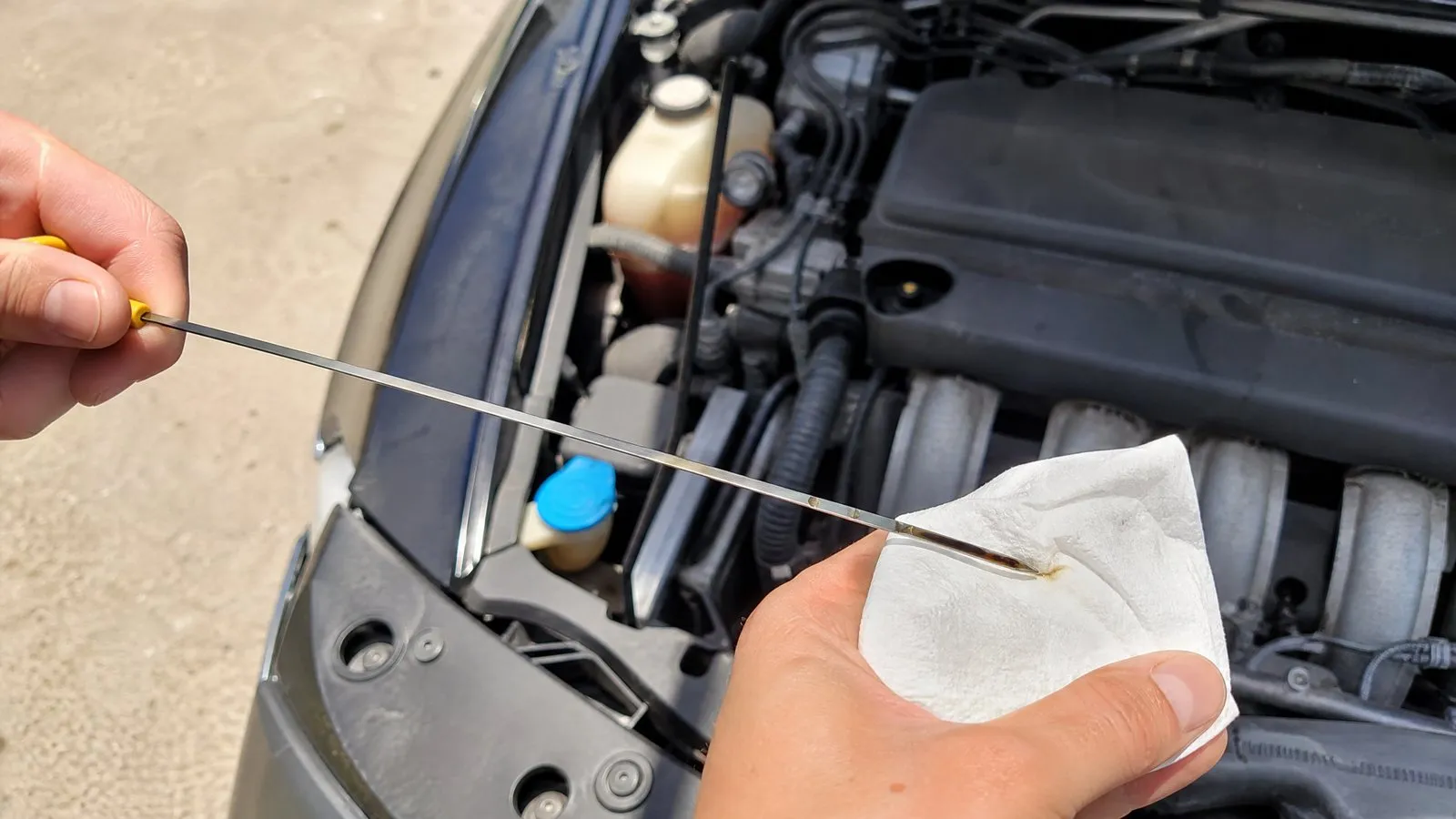
Checking your engine oil takes about three minutes and needs no tools. Park on level ground, turn the engine off and wait a few minutes, then pull the dipstick, wipe it, reinsert it fully, and pull it again to read the level against the two marks. The oil should sit between the low and high marks and look like a clean amber-to-brown film.
That’s the whole job. The rest of this guide covers the details that make your reading accurate, what the oil’s color and smell actually mean, how to top up without overfilling, and what to do if your car has no dipstick at all.
When to Check Your Oil
Timing and position matter more than people expect, because both change where the oil sits in the engine.
- Engine off. Never check with the engine running. You want the oil pooled in the pan, not circulating.
- Level ground. A sloped driveway tilts the oil and gives you a false high or low reading.
- Wait a few minutes. After driving, oil clings to the upper engine and drains down slowly. Most manuals suggest waiting 5 to 15 minutes after shutting off a warm engine so the oil can settle. A few manufacturers actually want the engine warm when you check, so this is the one place your owner’s manual is the final word.
- Cold is fine too. First thing in the morning, before you start the car, is a perfectly good time. The reading may sit slightly higher, which is normal.
How often? A good habit is once a month, and always before a long trip. If your car burns a little oil between changes, or it’s older with higher mileage, check every couple of weeks. Our 10-minute monthly car checklist folds this in with your other quick checks.
How to Read the Dipstick, Step by Step
- Find the dipstick. It usually has a brightly colored loop handle, often yellow or orange, near the front or side of the engine. Don’t confuse it with the transmission dipstick (if your car has one) or the oil filler cap. If you’re unsure, the owner’s manual shows its exact location.
- Pull it out and wipe it clean. Use a paper towel or clean rag. The first reading off a sitting engine is unreliable because oil has splashed up the stick.
- Reinsert it all the way. Push it fully back into the tube, then pull it out again smoothly.
- Read the level. Hold the stick horizontally and look at the end where the oil film stops. This second reading is your real one.
- Check the condition. While you have it out, note the color, how clear or dirty it looks, and whether it feels smooth or gritty between your fingers.
- Reinsert and seat it firmly when you’re done.
Reading the Min and Max Marks
The business end of the dipstick has two marks showing the safe operating range. They might be:
- Two drilled holes
- Two notches or lines
- The letters L and H (low and high)
- MIN and MAX
- A crosshatched or textured zone (the oil should land somewhere inside it)
Your goal is to see oil between the marks, ideally closer to the upper one. The gap between low and high typically represents about one quart (roughly one liter) of oil on most passenger cars.
| What you see | What it means | What to do |
|---|---|---|
| Oil at or near the high mark | Level is good | Nothing, wipe and reinsert |
| Oil in the middle | Normal, plenty of margin | Recheck next month |
| Oil at the low mark | Down about a quart | Top up soon |
| Oil below the low mark | Too low to run safely | Add oil before driving |
| No oil visible on the stick | Dangerously low | Do not drive until you add oil |
Running below the low mark means the pump may struggle to pick up enough oil, which can starve and damage the engine. If the level is very low, add oil before you drive. And if your oil pressure warning light ever comes on, that’s a different and more urgent problem, stop driving, because low pressure can wreck an engine in minutes.
What Oil Color and Texture Can Tell You
Color is a rough clue, not a diagnosis. Fresh oil is usually amber or honey-colored, and it darkens naturally as it does its job. Dark oil alone does not mean your oil is bad or overdue.
Here’s an honest breakdown of what you can and can’t read into it.
What color can suggest
- Amber to light brown: Newer, relatively clean oil.
- Dark brown to near-black: Normal for oil with some miles on it. Diesel engines turn oil black almost immediately, and that’s expected. Some additives darken oil quickly too.
- Very thick, sludgy, or tar-like: A sign oil has gone far too long without changing. This one’s worth acting on.
What color cannot tell you
Color can’t tell you whether the oil still has enough additive life left, or the exact mileage remaining before a change. Modern oils darken fast and still protect well. Don’t change oil just because it looks dark on the stick. Base your interval on mileage, time, and your manual instead, our guide on how often you should really change your oil walks through the real numbers, and the oil change calculator can estimate it for your car.
Texture and feel
Rub a drop between your fingers. Good oil feels smooth and slick. If you feel grit or metal particles, that can indicate internal wear and is worth having a mechanic look at. If the oil looks gritty or has visible flecks, don’t ignore it.
Two Warning Signs Worth Acting On
While color is mostly harmless, two things on the dipstick deserve attention.
Milky, tan, or foamy oil
Oil that looks like a coffee-with-cream color, or has a milky, mayonnaise-like texture, usually means coolant is mixing with the oil. That can point to a blown head gasket, a cracked head, or another internal leak. You might also see the same creamy residue under the oil filler cap.
A small amount of condensation under the cap can appear in cold weather on cars driven only short distances, and that alone isn’t alarming. But milky oil on the dipstick itself is a reason to see a mechanic promptly, especially if your car has also been running hot or losing coolant. If overheating is part of the picture, read what to do when your car overheats and have the coolant system checked.
A strong burnt smell
If the oil smells sharply burnt, like scorched toast, the engine may have been running too hot or the oil may be badly overdue. A faint oil smell is normal; a strong burnt one paired with low level or dark, thin oil is a prompt to change it and figure out why.
Also watch for a gasoline smell in the oil or a level that mysteriously rises above the high mark. Rising oil level with a fuel smell can mean gas is leaking into the oil, which thins it and reduces protection. Have that diagnosed.
How to Top Up Without Overfilling
If your oil is at or below the low mark, add some. Overfilling is as bad as running low, so go slowly.
- Know your oil. Use the exact grade your manual specifies, for example 0W-20, 5W-30, or 5W-40. Using the wrong viscosity can hurt fuel economy and, over time, the engine. The grade is printed in the manual and often on the oil filler cap.
- Add a little at a time. Remove the oil filler cap (not the dipstick tube) and pour in a small amount, about half a quart (roughly 250 to 500 ml) to start. A funnel helps avoid spills.
- Wait and recheck. Give it a minute or two to drain down, then check the dipstick again.
- Stop at the high mark. Don’t aim past it. Remember, the full span from low to high is usually only about a quart, so you rarely need much.
If you overfill
Too much oil can get whipped into foam by the crankshaft, which reduces lubrication and can push against seals. If you’ve gone well over the high mark, have the excess drained. A little over is less dramatic, but keep it close to the high mark rather than above it.
Topping up is a stopgap, not a fix. If you’re adding oil often, the car is either burning or leaking it. Look for blue smoke from the exhaust (burning) or spots on your driveway (leaking), and get it checked.
Cars With No Dipstick
Many newer vehicles, particularly from European brands, have no dipstick at all. Instead they use an electronic oil level sensor and show the level through the dashboard menu.
To check one of these:
- Follow your manual’s procedure, which usually means the engine warm, the car on level ground, and the ignition on or the engine idling, depending on the system.
- Navigate the instrument-cluster menu to the oil-level display. It typically shows a gauge or a simple “oil level OK” / “add oil” message.
- The system may need a minute or two to measure. Some won’t display a reading until conditions are right.
These systems also warn you on the dash when the level drops too low, and they’ll tell you how much to add. Top up through the filler cap the same careful way, a little at a time, then let the system remeasure. If you ever get an electronic low-oil warning, treat it seriously; it’s different from the red oil-pressure light, which still means stop. For help telling dashboard symbols apart, see dashboard warning lights explained or our interactive warning light guide.
A Quick Note on Spills and Safety
- Wipe up oil drips. Oil on a hot exhaust can smoke and smells bad, though it rarely ignites.
- Let a hot engine cool before reaching near the exhaust manifold.
- Oil is a pollutant. Collect any spilled or used oil and take it to an auto parts store or recycling center, never down a drain.
Checking oil is one of the easiest habits that saves real money, and it pairs naturally with your other routine checks. If you want a simple plan for the whole car, our car maintenance schedule for beginners lays out what to do and when, and the six car fluids to know covers the rest of what’s under the hood.
FAQ
Should I check my oil hot or cold?
Either works, but be consistent and follow your manual. Many manufacturers want the engine off and settled for 5 to 15 minutes after driving; a few specify checking it warm. A cold morning check before starting the car is reliable and easy, just expect the level to read slightly higher than when warm.
Does dark oil mean I need an oil change?
Not by itself. Oil darkens naturally as it works, and modern oils can look dark while still protecting the engine well. Base your change interval on mileage, time, and your owner’s manual rather than color. Thick, sludgy, or gritty oil is the exception worth acting on.
How much oil should I add if it’s low?
Usually less than you’d think. The gap between the low and high dipstick marks is roughly one quart on most cars. Add about half a quart at a time, wait a minute, and recheck. Stop when you reach the high mark, overfilling can cause its own problems.
What does milky or creamy oil mean?
It usually means coolant is mixing with the oil, often from a failing head gasket or similar internal leak. A little condensation under the filler cap in cold weather can be harmless, but milky oil on the dipstick itself warrants a prompt visit to a mechanic, especially if the car has been overheating or losing coolant.
My car doesn’t have a dipstick. How do I check the oil?
Use the electronic oil-level display in your dashboard menu, following your manual’s conditions (usually warm engine, level ground, ignition on). The system reads the sensor and shows the level or an “add oil” message, and it will warn you if the level drops too low.