Average Car Repair and Maintenance Costs (Itemized)
Typical US car repair and maintenance costs itemized, from oil changes to timing belts, plus what drives prices and how to budget a yearly fund.
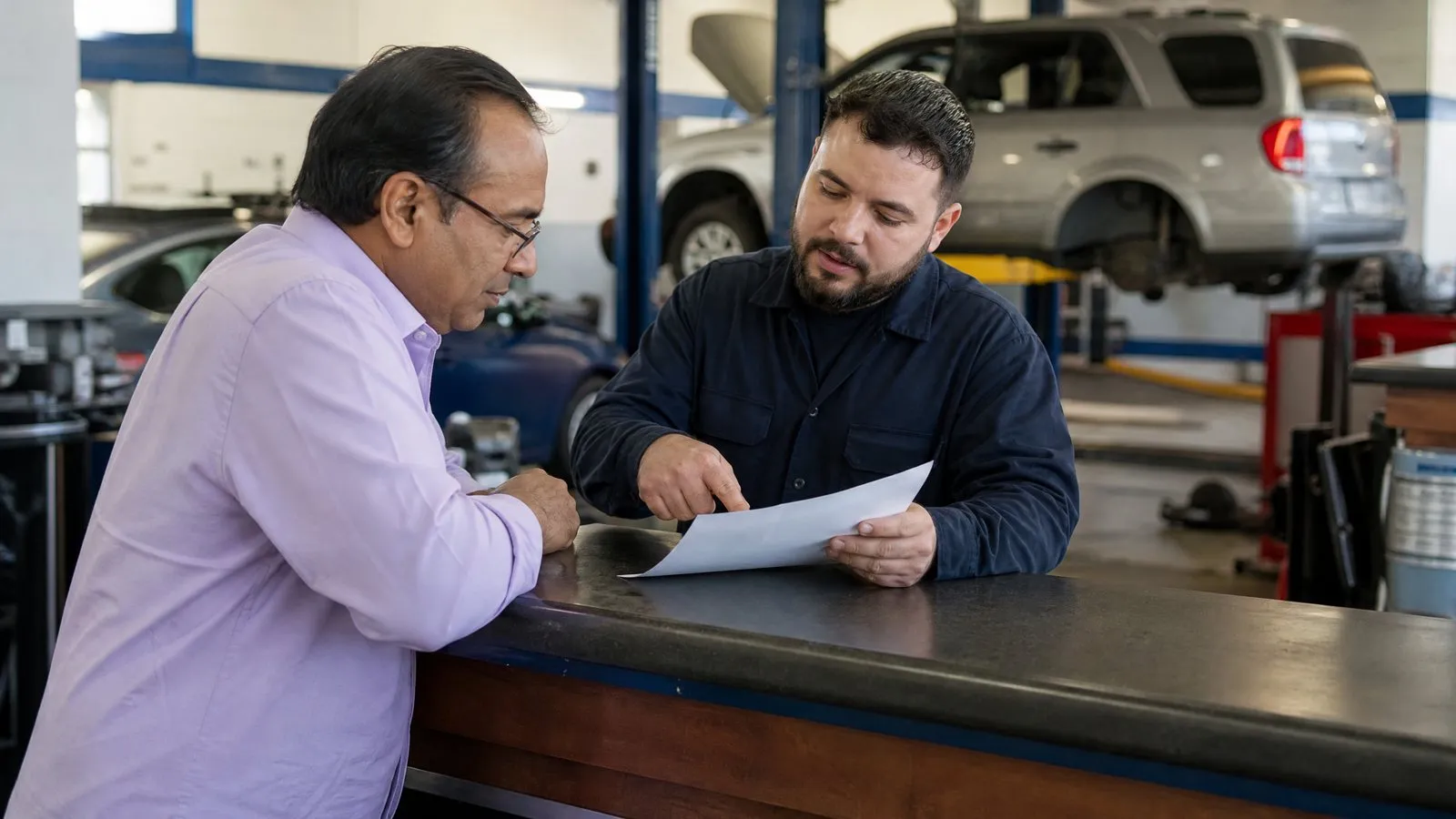
Here are the typical US price ranges for the most common car repair and maintenance jobs, from a $40 oil change to a $600–$1,200 timing belt replacement. Use the table below as a sanity check before you approve work, then read on for what actually drives the numbers and how much to set aside each year.
One honest warning up front: prices vary a lot. A brake job on a compact commuter car in a small town can cost less than half of the same job on a large SUV at a big-city dealership. Treat these as middle-of-the-road ranges, not quotes.
Typical US price ranges for common jobs
These figures include parts and labor at an independent shop or chain, which is where most drivers have work done. Dealerships usually sit at the higher end or above it.
| Job | Typical total cost (parts + labor) | How often it’s needed |
|---|---|---|
| Conventional oil change | $35–$75 | 3,000–5,000 miles |
| Synthetic oil change | $65–$120 | 7,500–10,000 miles |
| Tire rotation | $20–$50 (often free with tire purchase) | 5,000–8,000 miles |
| Wheel alignment | $80–$200 | As needed; check yearly |
| Engine air filter | $25–$60 | 15,000–30,000 miles |
| A/C recharge | $150–$300 (more if there’s a leak) | As needed |
| Battery replacement | $150–$350 installed | 3–6 years |
| Brake pads (one axle) | $150–$350 per axle | 25,000–70,000 miles |
| Brake pads + rotors (one axle) | $300–$650 per axle | Varies |
| Starter replacement | $400–$800 | As needed |
| Alternator replacement | $450–$1,000 | As needed |
| Water pump replacement | $500–$1,000 | 60,000–100,000 miles |
| Timing belt replacement | $600–$1,200 | 60,000–105,000 miles |
A few notes on the table:
- Brakes are priced per axle because front and rear wear at different rates. Fronts usually wear faster. Adding new rotors, not just pads, pushes the cost up.
- A/C recharge is cheap if the system just needs refrigerant. If it lost refrigerant, there’s a leak, and finding and fixing that is the real expense.
- Timing belt jobs are often bundled with a water pump and tensioner, since the labor to reach them is already done. That bundle can run $700–$1,500 but saves you paying the labor twice. Many newer engines use a timing chain that is designed to last the life of the engine, so you may never face this.
For a deeper look at the brake numbers specifically, see our guide on how long brake pads last and what replacement costs.
What drives the price
Two quotes for the identical job can differ by hundreds of dollars for legitimate reasons. Here’s what moves the needle.
Labor rates
Shop labor is billed by the hour, and rates range from roughly $90 to $200 per hour depending on where you live and the type of shop. Dealerships charge the most. Independent shops are usually cheaper, and rural areas cost less than major metros.
Shops also bill by “book time,” a standardized estimate of how long a job should take, not the actual minutes spent. So a repair listed as three hours of labor costs three hours even if the tech is fast.
Parts: OEM vs aftermarket
- OEM parts come from the vehicle manufacturer and cost the most.
- Aftermarket parts are made by other companies and range from budget to premium quality. Good aftermarket parts are fine for most jobs and can cut the parts bill by 20–50%.
- Remanufactured parts (common for alternators and starters) are rebuilt units that cost less than new.
Ask which type a shop plans to use. For a brake job, a quality aftermarket pad is a reasonable choice. For some sensors and electronics, OEM is worth it.
Your specific vehicle
The single biggest variable is often the car itself. Costs climb with:
- Luxury and European brands, which use pricier parts and sometimes require special tools.
- Larger vehicles (trucks and large SUVs) with bigger brakes, batteries, and more fluid.
- Hybrids and EVs, which have different components and fewer qualified shops.
- Tight engine bays, where simply reaching a part adds labor hours.
Region
Beyond labor rates, climate matters. Road salt in northern states rusts bolts and brake lines, which adds time and sometimes turns a simple job into a bigger one. Shops in high-cost-of-living areas charge more across the board.
How to keep costs down without cutting corners
You can lower your lifetime repair bill significantly without skipping anything important.
- Keep up with maintenance. A skipped oil change or ignored warning light often turns a $60 job into a four-figure repair. Our car maintenance schedule for beginners lays out what to do and when.
- Do the easy stuff yourself. Checking oil, swapping wiper blades, and replacing the engine air filter are genuinely simple. See how to check your engine oil and how to check and replace your engine air filter.
- Catch problems early. A quick monthly car checklist spots low fluids, worn tires, and dim lights before they strand you.
- Get more than one quote for anything over a few hundred dollars. Prices for the same repair really do vary that much.
- Learn to spot upsells. Not every “recommended” service is due. Our guide on avoiding unnecessary repair upsells shows how to tell maintenance you need from add-ons you don’t.
A trustworthy shop makes all of this easier. If you don’t have one yet, start with how to find a good mechanic you can trust.
Budgeting a yearly maintenance fund
Set money aside before something breaks, so a repair is an inconvenience rather than a crisis.
AAA has estimated that maintenance, repairs, and tires cost the average driver somewhere around 9 to 10 cents per mile. For a typical 12,000-mile year, that works out to roughly $1,100 to $1,200 a year, or about $90 to $100 a month. Newer cars under warranty cost less; older cars and high-mileage vehicles cost more.
A simple way to budget:
- Set a baseline. Put aside $50–$100 per month in a separate savings account. This covers routine service and smooths out the big-ticket surprises.
- Adjust for your car’s age. Under 5 years old and low mileage? The lower end is usually fine. Over 8 years or past 100,000 miles? Lean toward $100+ and expect occasional larger repairs.
- Front-load for known milestones. If your car is approaching 90,000–100,000 miles, a timing belt, water pump, or major fluid service may be due soon. Save extra ahead of it.
- Keep a separate tire line. A set of four tires runs roughly $500–$1,200 installed and is easy to forget until you need them. Set aside a little each month toward the next set.
A worked example
Say you drive a 7-year-old sedan with 95,000 miles, 12,000 miles a year. A realistic annual plan might look like this:
- Two synthetic oil changes: ~$180
- Two tire rotations: ~$60 (or free with your tires)
- One alignment check: ~$120
- Brake pads on one axle (not every year, but budget for it): ~$250 averaged out
- Battery, roughly every 4–5 years, averaged: ~$70/year
- A reserve for the unexpected (sensor, A/C, suspension): ~$400
That’s about $1,080 for the year, or $90 a month, which lines up with the AAA ballpark. In a quiet year you’ll spend less and build a cushion; in a year with a water pump or timing belt, you’ll draw it down.
When to spend now to save later
Some repairs are safety items, not optional. Don’t defer these:
- Brakes. Grinding, a pulsing pedal, or longer stopping distances mean act now. See signs your brakes need attention.
- Warning lights. A steady check engine light should be diagnosed soon; an oil pressure or overheating warning means stop. Our guide on dashboard warning lights explains what each one means.
- Tires with low tread. Bald tires are a crash risk in the rain, full stop.
Your owner’s manual is the final word on service intervals and specifications for your exact car. When the manual and a shop’s recommendation disagree, the manual wins unless the shop can show you a clear reason, like a visibly failing part.
FAQ
Why is the dealer so much more expensive than an independent shop?
Dealers typically charge higher hourly labor rates and often use OEM parts, which cost more. For warranty work, recalls, and complex electronic repairs, that premium can be worth it. For routine maintenance and common repairs, a reputable independent shop usually costs less for comparable quality.
Are aftermarket parts safe to use?
Quality aftermarket parts are fine for most repairs and can meaningfully lower your bill. The key is quality, not origin. Ask the shop which brand they use and whether it carries a warranty. For certain electronics and sensors, OEM parts are the safer choice.
How do I know if a quote is fair?
Get two or three quotes for the same job and compare the labor hours and parts, not just the total. A fair estimate itemizes parts and labor separately. If one shop is far cheaper, make sure it’s quoting the same work, not skipping steps.
Should I pay for an extended warranty to cover repairs?
It depends on the car and the contract. Extended warranties can cap your risk on an expensive-to-repair vehicle, but many exclude wear items and have deductibles. Compare the likely cost against setting aside your own repair fund. Our guide on factory vs extended warranty breaks down what’s actually covered.
What’s the cheapest way to lower my long-term repair costs?
Stay on top of basic maintenance and address small problems early. A $60 oil change on schedule and a 10-minute monthly check prevent far more expensive failures. Skipping routine care is the most common reason owners end up with large, avoidable repair bills.