Check Engine Light On? What to Do Right Now
Check engine light on? Learn what steady vs flashing means, how to check the gas cap, where to get codes read, common causes, and what diagnosis costs.
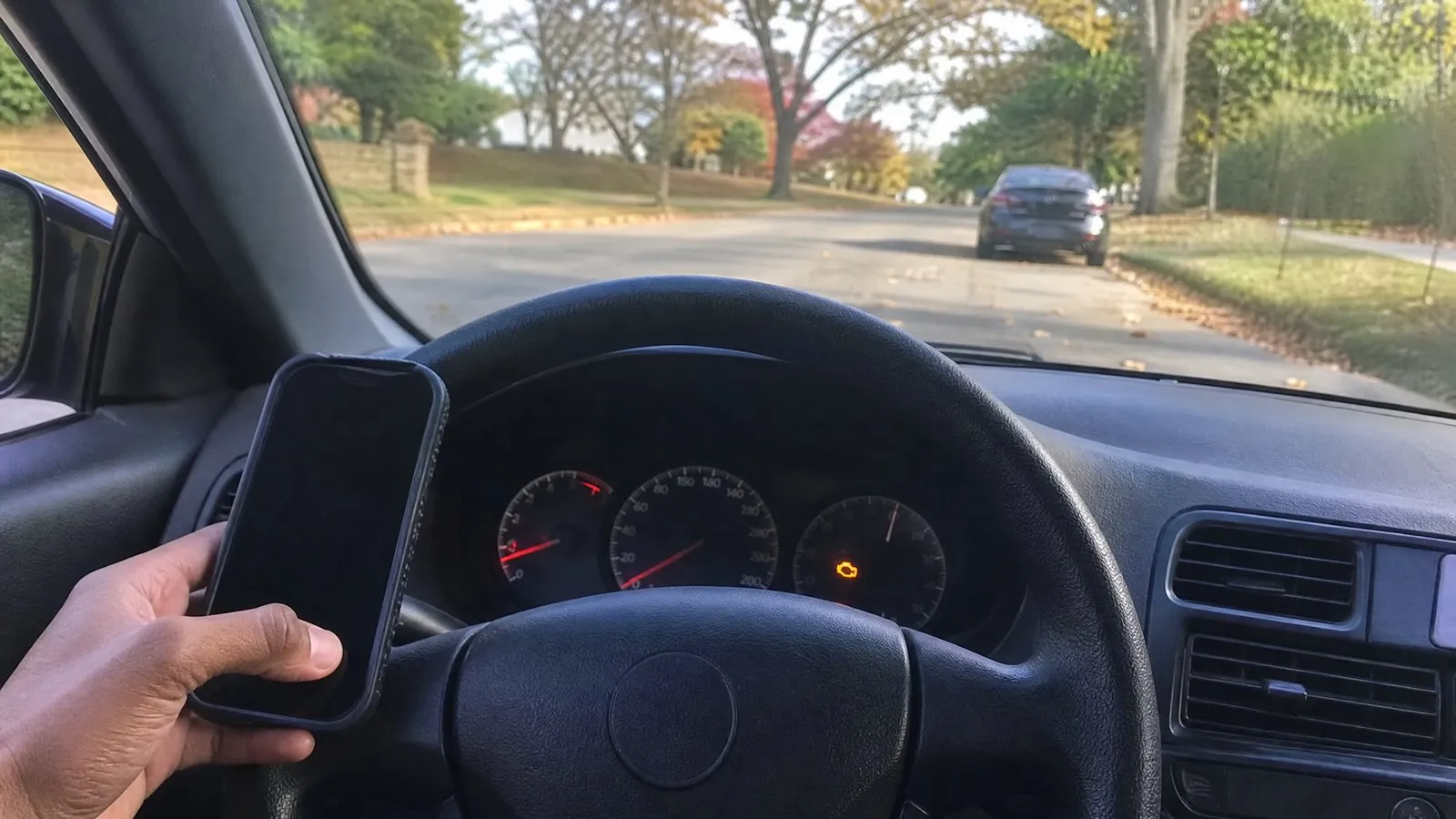
If your check engine light just came on and it’s steady (not flashing), you’re usually fine to keep driving carefully to a safe place. First, make sure your gas cap is tight, then plan to get the trouble code read in the next day or two.
If the light is flashing, that’s different. A flashing check engine light usually means the engine is misfiring badly, which can dump raw fuel into the exhaust and destroy your catalytic converter in minutes. Ease off the gas, avoid heavy acceleration and high speeds, and get the car checked right away or have it towed.
Here’s how to tell the two situations apart and exactly what to do next.
Steady vs flashing: the one distinction that matters most
The check engine light (officially the malfunction indicator lamp, or MIL) is amber or yellow and often shaped like an engine outline. How it behaves tells you how urgent the problem is.
| Light behavior | What it usually means | What to do |
|---|---|---|
| Steady / solid | A fault the computer has logged; often minor to moderate | Drive gently, check the gas cap, get codes read within a few days |
| Flashing / blinking | An active, severe misfire that can damage the catalytic converter | Reduce speed and load immediately; stop driving soon or get it towed |
| Steady, plus poor running (rough idle, stalling, loss of power) | A real drivability problem | Treat it more urgently; don’t delay the diagnosis |
| Steady, plus another red light (oil, temperature) | A second, possibly serious issue | Follow the more serious light first |
A steady light paired with a car that drives normally is rarely an emergency. A flashing light, or any amber light paired with a red one, deserves immediate attention.
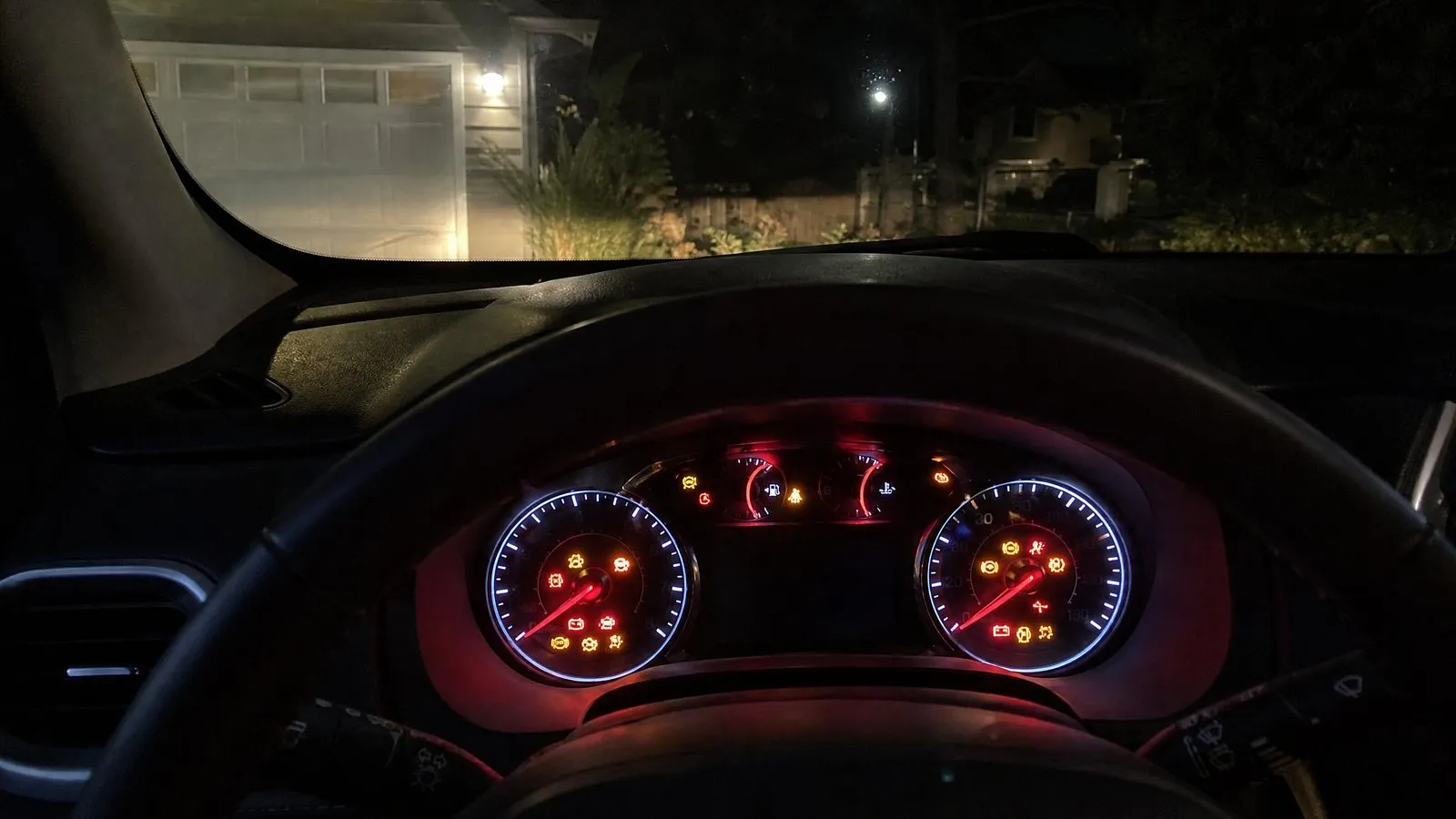
If you’re not sure which light you’re looking at, our dashboard warning lights explained guide and the interactive warning light guide can help you identify it.
What to do in the first five minutes
- Note how the light is behaving. Steady or flashing? Does the car feel normal, or is it running rough, hesitating, or losing power?
- Check your other gauges. If the temperature gauge is climbing or an oil or battery light is also on, that takes priority. See car overheating: what to do or the oil pressure warning light guide.
- Ease off if it’s flashing. Reduce speed, avoid hard acceleration, and get off the highway. You want to lower the load on a misfiring engine.
- Find a safe spot if anything feels wrong. A parking lot or wide shoulder beats the middle of traffic.
- Check the gas cap (details below). It’s free and it’s one of the most common causes.
Step 1: Check the gas cap
A loose, cracked, or missing gas cap is one of the most common reasons a check engine light comes on. The fuel system is sealed and pressure-tested by the car’s computer. A bad seal lets vapors escape, and the computer flags it as an evaporative emissions (“EVAP”) fault.
To check it:
- Turn the engine off.
- Remove the cap and inspect the rubber seal for cracks or grime.
- Reinstall it and turn until it clicks (usually three clicks on cars that use a clicking cap).
- If the cap is cracked or won’t seal, replace it. A new cap typically costs $10 to $30.
Here’s the catch: even after you fix the cap, the light won’t go out immediately. The computer needs to re-run its checks over several drive cycles. The light usually clears on its own within 1 to 3 days of normal driving. If it’s still on after about a week, get the code read.
Many newer cars have a capless fuel filler, so there’s no cap to tighten. On those, this step won’t apply.
Step 2: Get the trouble code read
Every car built for the US market since 1996 (and in the UK, most petrol cars since 2001 and diesels since 2004) has an OBD-II system. When a fault occurs, it stores a standardized “diagnostic trouble code” like P0300 (random misfire) or P0420 (catalytic converter efficiency). Reading that code is the starting point for every diagnosis.
Where to get codes read
- Auto parts stores. Many chain parts stores will read codes for free in the parking lot. It takes a few minutes. They’ll hand you the code and often a printout of likely causes. They may suggest parts, so keep our guide to avoiding unnecessary repair upsells in mind.
- A repair shop or dealer. They’ll charge a diagnostic fee, typically $75 to $150, but you’re paying for a real diagnosis, not just the raw code. More on that below.
- Your own code reader. A basic OBD-II scanner costs $20 to $40. Bluetooth adapters that pair with a phone app run $25 to $60. You plug it into the port under the dashboard (usually below the steering wheel), turn the key to “on,” and read the code.
How to read a code yourself
- Find the 16-pin OBD-II port, usually under the driver’s side of the dashboard.
- Plug in the reader with the engine off.
- Turn the ignition to “on” (engine not running) or start the car if the reader requires it.
- Select “read codes.” Write down every code, exactly, including the letter and numbers.
- Look up what each code means. The reader or app will usually give a short description.
Important: a code tells you the symptom, not always the cause. Code P0420 doesn’t automatically mean you need a $1,500 catalytic converter. It can be triggered by a bad oxygen sensor, an exhaust leak, or an old misfire. This is where a good mechanic earns their fee by narrowing it down before replacing expensive parts.
Don’t clear the code just to make the light go off. Clearing it erases the data a mechanic needs and the light will usually return. It can also wipe the “readiness monitors,” which may cause you to fail an emissions or safety inspection until the car is driven enough to reset them.
Common causes, from cheap to expensive
The check engine light covers hundreds of possible faults. These are among the most common, roughly from least to most expensive to fix.
| Cause | Typical signs | Typical repair cost |
|---|---|---|
| Loose or faulty gas cap | No drivability change | $0–$30 |
| Oxygen (O2) sensor | Light on, maybe worse fuel economy | $150–$500 |
| Mass airflow sensor | Rough idle, hesitation | $200–$450 |
| Spark plugs / ignition coils | Misfire, rough running, flashing light | $150–$600 |
| EVAP system leak (hose, valve) | No drivability change | $150–$600 |
| Catalytic converter | P0420, failed emissions, sometimes sulfur smell | $900–$2,500+ |
These are broad US ranges; parts and labor vary widely by make, model, and region. For more detail, see our average car repair costs guide.
A dirty engine air filter won’t usually trigger the light by itself, but it’s cheap to check and affects how the engine runs. See how to check and replace your engine air filter.
Why you shouldn’t ignore it
A steady light on a car that drives fine isn’t an emergency, but it’s not something to leave for months either. Here’s why acting matters:
- Small problems get expensive. A failing oxygen sensor left alone can lead to a ruined catalytic converter. The sensor might be $300; the converter can be several times that.
- You’re probably burning extra fuel. Many faults that trigger the light make the engine run less efficiently, so you pay for it at the pump every week.
- It masks new problems. If the light is already on, you won’t notice when a second, more serious fault appears.
- It can block your inspection. In many US states and in other countries, a car with the check engine light on will fail an emissions or roadworthiness test.
The Car Care Council, which runs public vehicle-care campaigns, consistently notes that an illuminated check engine light is one of the most commonly ignored maintenance items, and that ignoring it tends to raise the eventual repair bill.
When to stop driving or call for a tow
Call for a tow, or stop driving, if any of these are true:
- The light is flashing and doesn’t stop.
- The car is running badly: stalling, bucking, barely accelerating, or you smell something burning.
- A red warning light (oil pressure, temperature, charging/battery) is also on. See the oil pressure and battery light guides.
- The engine is overheating.
If the light is steady and the car drives and sounds completely normal, it’s generally safe to drive it to a shop within a day or two.
What diagnosis costs, and how to keep the bill fair
Reading the raw code is often free at a parts store. A proper diagnosis at a shop usually costs $75 to $150, and many shops will apply that fee toward the repair if you have them do the work.
To keep costs honest:
- Get the code before you go so you can ask informed questions.
- Ask for the diagnostic result in writing, including the code and the specific test that confirmed the cause.
- Be wary of “just replace the part the code names.” Ask how they confirmed that part is actually the problem.
- Get a second opinion on any repair over a few hundred dollars.
Our guides on finding a good mechanic and avoiding repair upsells go deeper on both.
If your car is still under its factory warranty, the repair may be covered, especially emissions components like the catalytic converter, which carry extended coverage requirements in the US. See factory warranty vs extended warranty.
Preventing the next one
Many check engine lights trace back to skipped maintenance: worn spark plugs, a clogged air filter, old oxygen sensors, or ignoring small issues until they grow. Staying on top of basic upkeep is the cheapest insurance you have.
- Follow a simple car maintenance schedule.
- Do the 10-minute monthly checklist.
- Keep your oil changed on schedule and check the level regularly.
None of these guarantees you’ll never see the light again, but they dramatically cut the odds and keep small problems small.
FAQ
Can I keep driving with the check engine light on?
If it’s steady and the car drives, sounds, and feels normal, yes, usually for a short time, long enough to get the code read within a day or two. If the light is flashing, or the car is running rough, losing power, or showing a red warning light, stop driving and get help to avoid serious damage.
Will the check engine light turn off by itself?
Sometimes. If the cause was minor and temporary, such as a loose gas cap you’ve since tightened, the light often clears on its own after several drive cycles, typically within 1 to 3 days. If it stays on after about a week, get the code read. Clearing the code manually just hides the problem.
How much does it cost to find out what’s wrong?
Reading the raw code is free at many auto parts stores. A full diagnosis at a repair shop usually costs $75 to $150, and many shops apply that fee toward the repair if you have them fix it.
Does a check engine light mean I’ll fail an emissions test?
Very often, yes. In many US states and in other countries, a car with the check engine light on will fail an emissions or roadworthiness inspection automatically, regardless of the actual fault. Get the issue fixed and let the system fully reset before testing.
Is it bad to just put tape over the light?
Yes. The light is the only warning you’ll get if a second, more serious problem develops. Covering it also doesn’t fix the underlying fault, which may be costing you fuel economy or quietly damaging the catalytic converter. Diagnose it instead.
A note on health information: Our guides are general information for typical passenger cars. Always follow your vehicle's owner's manual, and have safety-critical problems such as brakes or steering checked by a qualified mechanic. If a warning light is red or the car drives differently, stop safely and get help.